

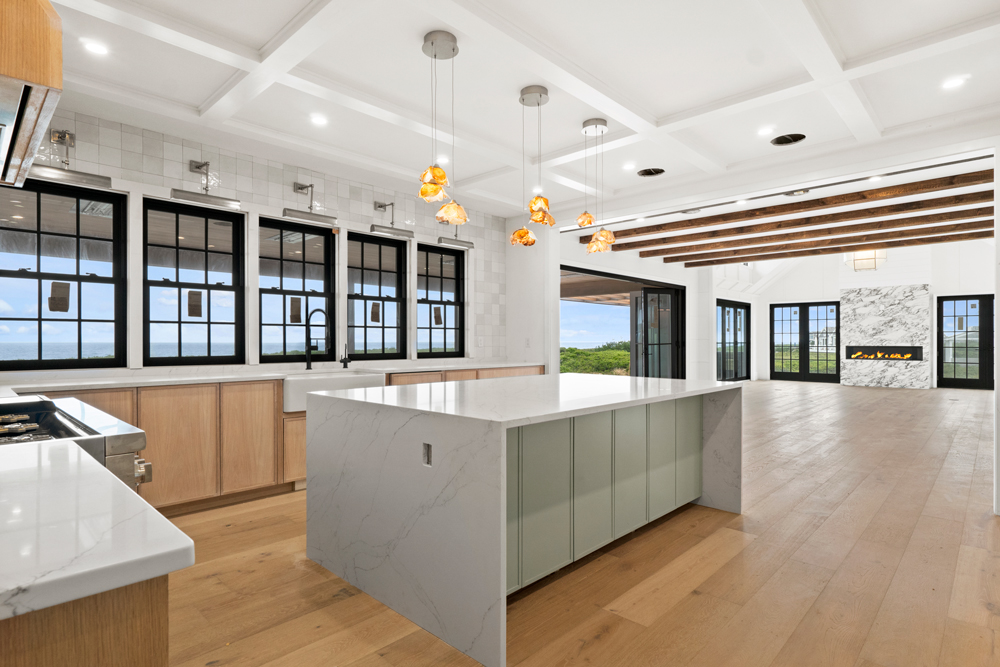
Open-concept homes create a beautiful sense of space, but they also make flooring decisions more complicated. When there are fewer walls separating the kitchen, dining room, living room, and entryway, the floor becomes one continuous visual element. A material that looks perfect in one room suddenly has to work across several different environments.
For Bradenton homeowners considering hardwood or tile, the decision should go beyond which sample looks better. Both materials can create beautiful interiors, but they produce very different experiences underfoot and interact differently with Florida's climate, architecture, furniture, and lifestyle.
The Floor Becomes the Background for Everything Else
In an open floor plan, flooring occupies a large percentage of the visible space. It sits underneath the kitchen island, dining table, sofa, chairs, rugs, and other furniture while remaining visible between each element.
This means the floor should support the overall design rather than compete with it. If your kitchen already has dramatic cabinetry or a detailed backsplash, a more restrained floor may provide balance. If the architecture is simple, the flooring can contribute more texture and character.
Hardwood Creates Warmth and Continuity
Hardwood has a natural warmth that can make an open floor plan feel inviting. Because wood has variation in grain and tone, it can add visual texture without requiring a complicated pattern.
Hardwood is also particularly effective when the same material extends across several rooms. Instead of visually stopping at the kitchen or dining area, the floor can continue through the main living space, helping the entire level feel like one connected environment.
Tile Creates a Different Kind of Continuity
Tile can create an equally cohesive open floor plan, but the visual character is different. Large-format tile can minimize grout lines and create a broad, clean surface. Stone-look tile can introduce natural variation, while wood-look tile can combine a plank appearance with the visual identity of tile.
For homeowners who want a crisp, contemporary atmosphere, tile can become an important part of the architecture rather than simply a practical surface.
Florida Climate Should Be Part of the Decision
Bradenton's climate makes moisture and humidity important considerations when selecting flooring. Hardwood is a natural material that responds to changes in its environment, so product selection and installation conditions matter.
Tile has different characteristics because it is a hard, fired material that does not respond to humidity in the same way wood does. That can make it appealing in spaces where homeowners want a hard surface and are particularly concerned about moisture.
However, the decision should still be based on the specific room and product rather than assuming one material is universally appropriate for every situation.
Consider the Kitchen
The kitchen is often the center of an open floor plan. It connects directly to the living and dining areas, which means the flooring needs to work with cabinets, countertops, appliances, islands, rugs, and furniture.
Hardwood can provide an elegant continuous transition between the kitchen and surrounding rooms. Tile can offer a highly durable hard-surface aesthetic and can become a strong design feature in its own right.
Think about how your household actually uses the kitchen. Do you cook every day? Do children gather around the island? Are spills common? Does the kitchen connect directly to an outdoor entertaining area? These lifestyle questions should influence the decision.
Think About Indoor-Outdoor Living
Florida homes often have a strong relationship with outdoor spaces. Sliding glass doors, patios, lanais, pools, and outdoor entertaining areas can make the boundary between indoors and outdoors feel less pronounced.
Tile can provide an especially natural visual connection between interior and exterior areas when compatible materials are selected. A consistent or complementary color palette can make the transition feel intentional.
Hardwood can also work beautifully inside, particularly when the goal is to create a warm interior that contrasts with the outdoor environment.
Rugs Can Change the Equation
Neither hardwood nor tile needs to remain visually bare. Area rugs can define the living room, soften a dining area, or create a comfortable conversation zone.
This can be particularly useful in an open floor plan because rugs provide visual boundaries without requiring walls. The flooring remains continuous underneath, while the furniture and rugs establish separate functions.
Think About Sound and Comfort
Hard flooring can produce a different acoustic experience from carpet or softer surfaces. In an open room with high ceilings and large hard surfaces, sound can travel more easily.
Furniture, curtains, upholstered pieces, rugs, and other textiles can help absorb sound and soften the room. This is worth considering during the design stage rather than after the floor is installed.
Which Material Fits Your Design Style?
Hardwood tends to work naturally with interiors that emphasize warmth, natural materials, traditional architecture, transitional design, or contemporary spaces that need a softer element.
Tile can move across an even wider range of styles. Large-format neutral tile can create a minimalist environment, stone-look surfaces can create an organic feel, and wood-look tile can provide warmth while retaining the visual language of tile.
Look at the Whole Sightline
Before choosing a floor, stand at the entrance to the main living area and imagine the completed room. You may be able to see the kitchen, dining table, living room, hallway, and windows simultaneously.
Ask whether the flooring makes all those elements feel connected. This is more useful than judging a sample in isolation. The floor needs to work from multiple viewpoints because that is how an open-plan home is experienced.
Don't Let a Trend Make the Decision for You
Current design trends can provide inspiration, but flooring is a long-term investment. A floor should still work when the sofa changes, the walls are repainted, or the kitchen receives a future update.
Natural materials, neutral palettes, and carefully selected patterns can give homeowners flexibility. The goal is to create a floor that supports the home's architecture rather than locking the entire interior into one particular trend.
Hardwood and Tile Can Both Work in Bradenton
The decision between hardwood and tile does not have to be framed as finding the universally superior material. The more useful question is which material fits the room, the climate, the architecture, the maintenance expectations, and the way the household lives.
For some homeowners, hardwood will provide the warmth and continuity they want. For others, tile will offer the hard-surface performance and design flexibility that better suits their lifestyle. The right answer is the one that makes sense for the specific home.
Explore the hardwood flooring collection and tile flooring collection from Georgia Carpet and Floors to compare different design directions.
When you are ready to discuss your project, visit the Georgia Carpet and Floors contact page.


