

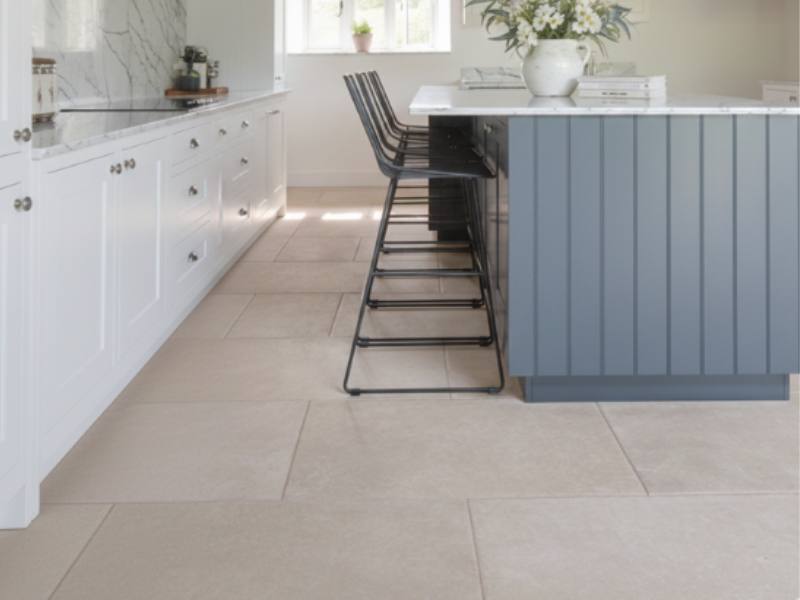
Tile has always been a practical flooring choice, but modern tile design has changed the way homeowners think about it. Instead of small, repetitive patterns covering the floor, large-format tile can create broad visual surfaces with fewer grout lines and a cleaner overall appearance. For homeowners in Bradenton, this approach can be particularly useful when creating interiors that feel bright, spacious, and connected.
Large-format tile is not simply about choosing the biggest tile available. The dimensions of the room, the layout, the substrate, furniture placement, grout color, and installation pattern all influence the final result. When these elements work together, larger tiles can make a room feel more expansive without physically changing its dimensions.
Why Fewer Grout Lines Can Change the Visual Effect
Every grout line creates a visual interruption. When a floor is covered with many small tiles, the eye sees a repeating grid. Larger tiles reduce the number of visible divisions across the same area, allowing the flooring to read more like a continuous surface.
This can be especially effective in rooms where homeowners want a clean, contemporary appearance. Instead of the floor becoming a collection of individual squares, the material becomes a larger visual plane.
Large Tile Can Be Particularly Effective in Open Floor Plans
Open-concept homes depend heavily on visual continuity. When the kitchen, dining room, and living area are connected, flooring becomes one of the strongest elements tying those spaces together.
Large-format tile can help maintain that sense of continuity. A carefully selected tile can move from one zone to another without creating a visually busy pattern. Furniture and rugs can then establish individual spaces while the floor keeps the larger room connected.
Stone-Look Tile Brings Natural Texture Indoors
One reason tile remains popular is the range of visual styles available. Stone-inspired designs can bring the appearance of natural material into a home without requiring the maintenance considerations associated with some natural stones.
Subtle variation can add depth without overwhelming the room. A neutral stone-look tile can work as a foundation for both traditional and contemporary interiors, allowing furniture and decorative elements to change without requiring the floor to change with them.
Wood-Look Tile Offers Another Design Direction
Homeowners who love the appearance of wood but want the characteristics of tile have another option: wood-look tile. Modern manufacturing techniques can create remarkably detailed interpretations of wood grain, plank patterns, and natural variation.
This can be particularly interesting in Florida rooms where homeowners want a warmer visual appearance while prioritizing a hard surface. Wood-look tile can create continuity across spaces while providing a distinctly different flooring experience from natural hardwood.
Tile Is More Than a Kitchen Floor
Although kitchens remain an important application for tile, homeowners can use it throughout the house. Entries, bathrooms, laundry rooms, hallways, living areas, and other spaces can all benefit from tile when the material is selected appropriately for the environment.
The key is to think about how the tile relates to the architecture. A highly patterned tile can become a feature in a small entryway, while a restrained large-format tile may work better across a large open living space.
Grout Color Can Change the Entire Look
Choosing a tile without considering grout is like choosing a wall color without considering the trim. The two materials work together.
A grout color that closely relates to the tile can reduce the visual emphasis of the individual joints and strengthen the continuous appearance of a large-format installation. A contrasting grout can make the pattern and individual tiles more prominent.
Neither approach is automatically better. The choice depends on whether you want the tile itself or the pattern of the installation to become the stronger visual feature.
Room Proportion Matters
Large-format tile is often associated with large rooms, but size alone should not determine whether it works. The important consideration is proportion. A large tile can sometimes create a clean visual effect in a smaller room, while an excessively large format may create difficult cuts around fixtures, cabinets, or architectural features.
Professional planning is particularly useful here. The installation should be considered before the tile is ordered so that the layout, cuts, transitions, and focal points are all understood.
Don't Forget Natural Light
Florida homes can receive strong natural light, and that light can emphasize the texture and variation of a tile. Glossy surfaces may reflect light more strongly, while matte surfaces can create a softer appearance.
Consider how the tile will look at different times of day. A color that appears neutral in the showroom may take on different character in direct sunlight. Looking at samples in the actual room can provide a much better understanding of the final effect.
Large Tile Can Create a Calm Interior
Modern interiors often rely on simplicity rather than decoration. Instead of filling a room with multiple patterns, homeowners can use texture and proportion to create interest.
A large-format tile with subtle variation can provide exactly that kind of understated character. The floor has enough visual detail to avoid feeling flat but not so much that it competes with furniture, artwork, cabinetry, or architectural features.
Think About the Rest of the House
If tile is being installed next to hardwood, the relationship between the two materials matters. The colors do not need to match exactly, but their undertones should work together. A warm wood floor beside an extremely cool tile can create an unintended visual break, while complementary tones can make the transition feel deliberate.
Transitions should also occur at logical architectural points whenever possible. Doorways, changes in room function, and natural boundaries can help different flooring materials coexist gracefully.
Tile Can Be a Long-Term Design Choice
Because flooring is replaced far less frequently than furniture or paint, homeowners should think about longevity when selecting a tile style. Extremely specific trends may look exciting today but become difficult to coordinate with future design changes.
Neutral colors, natural textures, restrained patterns, and well-proportioned formats can provide more flexibility over time. That does not mean the floor has to be boring. It means the design should have enough character to remain interesting without depending entirely on a short-lived trend.
See How Tile Can Transform the Scale of a Room
Large-format tile is ultimately about more than size. It is about visual continuity, proportion, pattern, texture, and the relationship between the floor and the rest of the room. When those elements are planned together, tile can make a Bradenton home feel cleaner, more spacious, and more intentionally designed.
Georgia Carpet and Floors offers tile flooring options for homeowners looking to update kitchens, living spaces, entries, bathrooms, and other areas of the home. Explore the tile flooring collection to begin comparing styles.
To discuss your flooring plans and explore options for your home, visit the Georgia Carpet and Floors contact page.


