

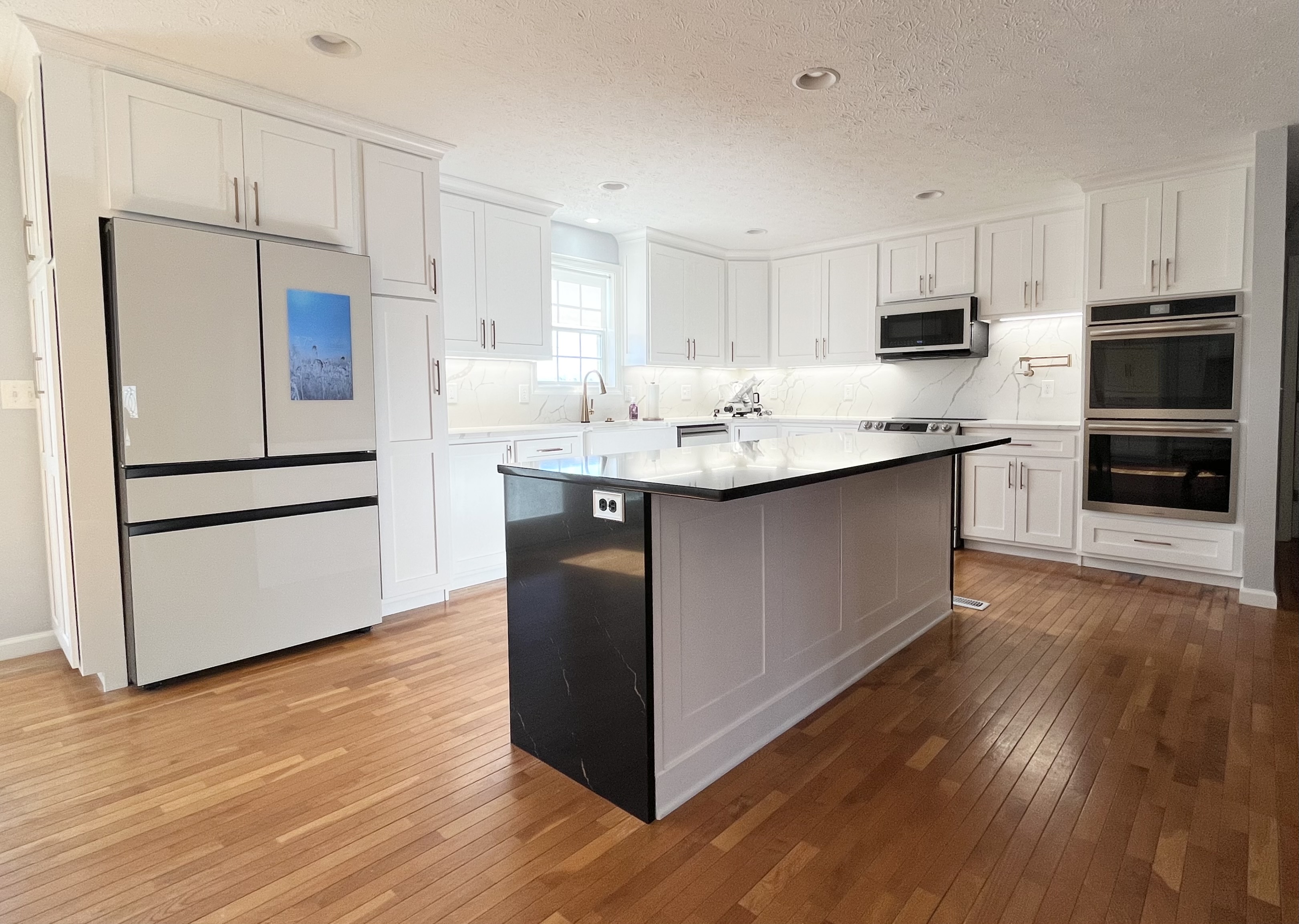
The kitchen has become one of the most important design spaces in a modern home. It is where meals are prepared, conversations happen, homework gets finished, guests gather, and everyday routines unfold. Because so much happens there, the flooring has to do more than look attractive. It needs to fit the way the room is used while working with cabinetry, countertops, appliances, lighting, and the adjoining areas of the home.
For Bradenton homeowners, choosing between hardwood and tile adds another layer to the decision. Florida's warm climate, humidity, bright sunlight, and indoor-outdoor lifestyle can influence how different flooring materials fit into the kitchen. The best choice begins with understanding what you want the kitchen to feel like and how you expect the floor to perform.
Start With the Kitchen You Actually Have
Inspiration photographs can be useful, but your kitchen has its own architecture. Cabinet colors, island dimensions, countertop materials, window placement, ceiling height, and natural light all affect the way flooring will look.
Before choosing a floor, identify the strongest existing features. If the cabinetry is visually dominant, the floor may work best as a quieter foundation. If the cabinets are simple and neutral, flooring can contribute more texture and character.
Hardwood Can Make the Kitchen Feel Like Part of the Living Space
One reason homeowners choose hardwood for open kitchens is continuity. When the kitchen connects directly to a living or dining room with hardwood, the floor can visually eliminate the boundary between those functions.
This creates a more integrated feeling. Instead of thinking of the kitchen as a separate work zone, the entire area becomes one living environment.
Hardwood also introduces natural grain and variation, which can soften the appearance of kitchens dominated by stone, metal, glass, and painted cabinetry.
Tile Can Create a Stronger Architectural Statement
Tile offers a different design vocabulary. Large-format stone-look tile can create a calm, contemporary foundation, while patterned tile can become a statement feature. Wood-look tile can provide the visual rhythm of planks while maintaining the distinct character of a tile installation.
Because tile comes in so many formats and visual styles, it can be adapted to both traditional and modern kitchens. The important thing is to select a design that works with the scale of the room.
Think About Spills Before You Think About Trends
Kitchens are inherently messy spaces. Water, sauces, oils, food, cleaning products, and other liquids can find their way onto the floor. That does not automatically eliminate hardwood from consideration, but it does make product selection, installation, and maintenance important parts of the decision.
Tile provides another hard-surface option for homeowners who place a high priority on moisture tolerance. As always, product specifications and installation requirements should be reviewed before making a final selection.
What Happens When the Kitchen Opens to the Patio?
Bradenton homes often make outdoor living a major part of the lifestyle. A kitchen may connect directly to a lanai, patio, pool area, or outdoor entertaining space through large glass doors.
This connection can influence flooring choices. A tile floor can help create a visual relationship between indoor and outdoor surfaces when compatible materials are selected. The result can make the living space feel larger and strengthen the connection with the outdoors.
Hardwood Can Bring Warmth to a Bright Florida Interior
Florida interiors can naturally lean toward bright, airy palettes. While that can create a beautiful atmosphere, too many cool or hard surfaces can sometimes make a room feel visually sterile.
Hardwood introduces organic variation and warmth. Even a relatively restrained wood tone can create a more comfortable visual balance against white cabinets, light countertops, stainless steel appliances, and large windows.
Tile Can Keep the Look Clean and Contemporary
For homeowners who prefer a streamlined appearance, large-format tile can create broad visual planes with fewer grout lines. Neutral porcelain or ceramic designs can provide a sophisticated foundation without competing with the rest of the kitchen.
Tile also gives homeowners the opportunity to experiment with stone-inspired textures and patterns that would be difficult to achieve with hardwood.
Don't Forget the Dining and Living Areas
If the kitchen is open to other rooms, the flooring needs to make sense beyond the kitchen itself. A floor that looks beautiful beneath the island might clash with the dining table or living room furniture.
This is why flooring samples should be evaluated throughout the open space. Look at the material beside the kitchen cabinets, then move it toward the sofa and dining table. View it from the main entrance and from different angles.
Use Rugs to Add Warmth Without Changing the Floor
Area rugs can soften hard flooring and create visual zones within an open kitchen and living area. A rug beneath a dining table can distinguish the dining space from the kitchen, while a living-room rug can create a dedicated seating area.
This allows homeowners to keep the same floor throughout the open plan while still giving each zone its own personality.
Consider the Color of the Cabinets
Kitchen cabinetry and flooring occupy two of the largest visual surfaces in the room. Their relationship matters.
Wood cabinets do not necessarily require a matching wood floor. In fact, slightly different tones can create a richer, layered appearance. Painted cabinets can also pair beautifully with both warm hardwood and neutral tile.
The important thing is to look at undertones. Warm, neutral, and cool tones can interact very differently once they occupy large areas of the same room.
Think About How the Kitchen Will Age
A kitchen renovation can last many years, while appliances, furniture, paint colors, and decorative trends change much sooner. Flooring should therefore be selected with the long term in mind.
A floor that provides flexibility can make future updates easier. If you repaint the cabinets or replace the island lighting several years from now, the flooring should still provide a compatible foundation.
There Is No Single Florida Kitchen Floor
Every Bradenton home has a different combination of architecture, lifestyle, lighting, and priorities. Hardwood can provide warmth and continuity. Tile can provide a wide range of visual possibilities and a hard-surface solution for demanding areas. Neither should be selected simply because it is considered fashionable.
The better approach is to evaluate the kitchen as a complete environment and select flooring that supports both its appearance and its everyday use.
Georgia Carpet and Floors can help homeowners explore hardwood and tile options for kitchen renovations and broader flooring projects. Visit the hardwood flooring page or explore the tile flooring collection to begin comparing possibilities.
To discuss your kitchen or flooring project in Bradenton, visit the Georgia Carpet and Floors contact page.


